|
|
|

| WWW.LOCRIANTICA.IT | Welcome to Magna Graecia | INDEX |
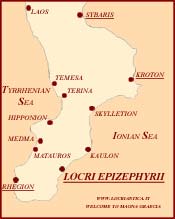 GEOGRAPHICAL POSITION |
|||
| LOCRI EPIZEPHYRII | |||
|
"A Locris Italiae frons incipit, |
|||
|
|
|||
|
|
|
 HISTORY |
It's probably the largest section of the site, and it's rightly so. As a matter of fact it covers a large space of time: approximately 15 centuries of history, from the VIII century b.C. to the VII-VIII century A.D.: from the arrival of the first Greek settlers until the time when the coastal zone was left due to the spreading of malaria and to the constant and unstoppable Arab raids. |
|
|
|
|
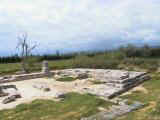
The proper ancient city. The Sanctuaries (with their few ruins), the Theatre, the Walls, the Craftsmen's Neighbourhood (Centocamere); but the greatest part of the city still lies underground and awaits from centuries to be brought to light. Inside this section you will also find a short mention about the history of the archaeological activity in Locri Epizephyrii, from its discovery until nowadays, and also some information regarding the National Archaeological Museum of Locri Epizephyrii. |
 ARCHAEOLOGICAL SITE |
|
|
|
 ARCHAEOLOGICAL FINDS |
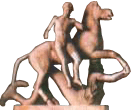
Thousands and thousands of archaeological finds were unearthed. Many of them can be admired at the National Archaeological Museum Of Locri Epizephyrii, such as the Statue of a Togatus. Others, such as the greater part of the Pinakes, the acroterion group of the Dioscuri or the Bronze Tablets of the archive of the Sanctuary of Olympian Zeus, can be found at the National Museum Of Reggio Calabria; yet others, such as the statue of Persephone, lie somewhere else and their origins are misinterpreted. |
|
|
|
|
The Ancient Locri was the birthplace of many renowned and highly
regarded people in the antiquity; we can cite as proof
Zaleukos, the
first western lawgiver, he provided that the laws should have been written to avoid the arbitraries decisions
of the judges based upon oral laws. We can also cite the philosopher
Timaeus or the poetess
Nossis, "The Sappho's competitor", whose few
epigrams, that reached our age, show us her undoubted greatness. |
 HISTORICAL FIGURES |
|
|
|
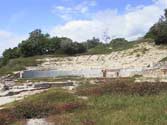 PHOTO GALLERY |
This section wants to be a showcase in which you can admire a little portion of the areas involved by the archaeological explorations of the territory of the ancient Locri and, as all the other sections of the site, it wants to be a further invite to you all to come and visit these places which still today reflect the ancient echoes of the history of the men and of the women which here made possible the thriving of an original and extraordinary culture whose memory thousands of years weren't able to delete. |
|
|
|
|
A list of books and texts connected with Locri Epizephyrii's history consulted during the building of this site and others books whose subject is Magna Graecia's history. There are also references to texts useful for the knowledge of the Greek world as a whole (history, archaeology, arts, etc.) |
 BIBLIOGRAPHY |
|
|
|
 LINKS TO OTHER SITES |
Links to other interesting sites whose subject is strictly connected to the ancient world, Greek and Roman. There are also links to some universities sites that started research projects upon the ancient world, with, furthermore, the web unabridged edition of the literary works of classical writers with original texts in Latin and Greek. |
|
|
|
 BACK TO THE TOP 

Privacy Policy - Cookie Policy |